

Industry Overview for Executives, Boards & Digital Leaders
The UK housing sector is rapidly embracing digital transformation. From mobile tenant portals and cloud-hosted management platforms to IoT-enabled smart building systems, technology is improving operational efficiency and resident experience. However, these innovations expose organisations operating in the UK housing sector to a complex and evolving cyber risk landscape. Housing providers must navigate threats that range from AI-enhanced phishing to cloud misconfigurations, while balancing regulatory requirements and operational dependencies.
This latest insight provides an overview of the key challenges, and practical solutions that PureCyber’s managed services can offer to organisations building long-term resilience.
Cyber Challenges Facing Housing Providers

Housing organisations face a convergence of risk factors, driven by sensitive data management, critical operational services, and increasingly complex technology environments.
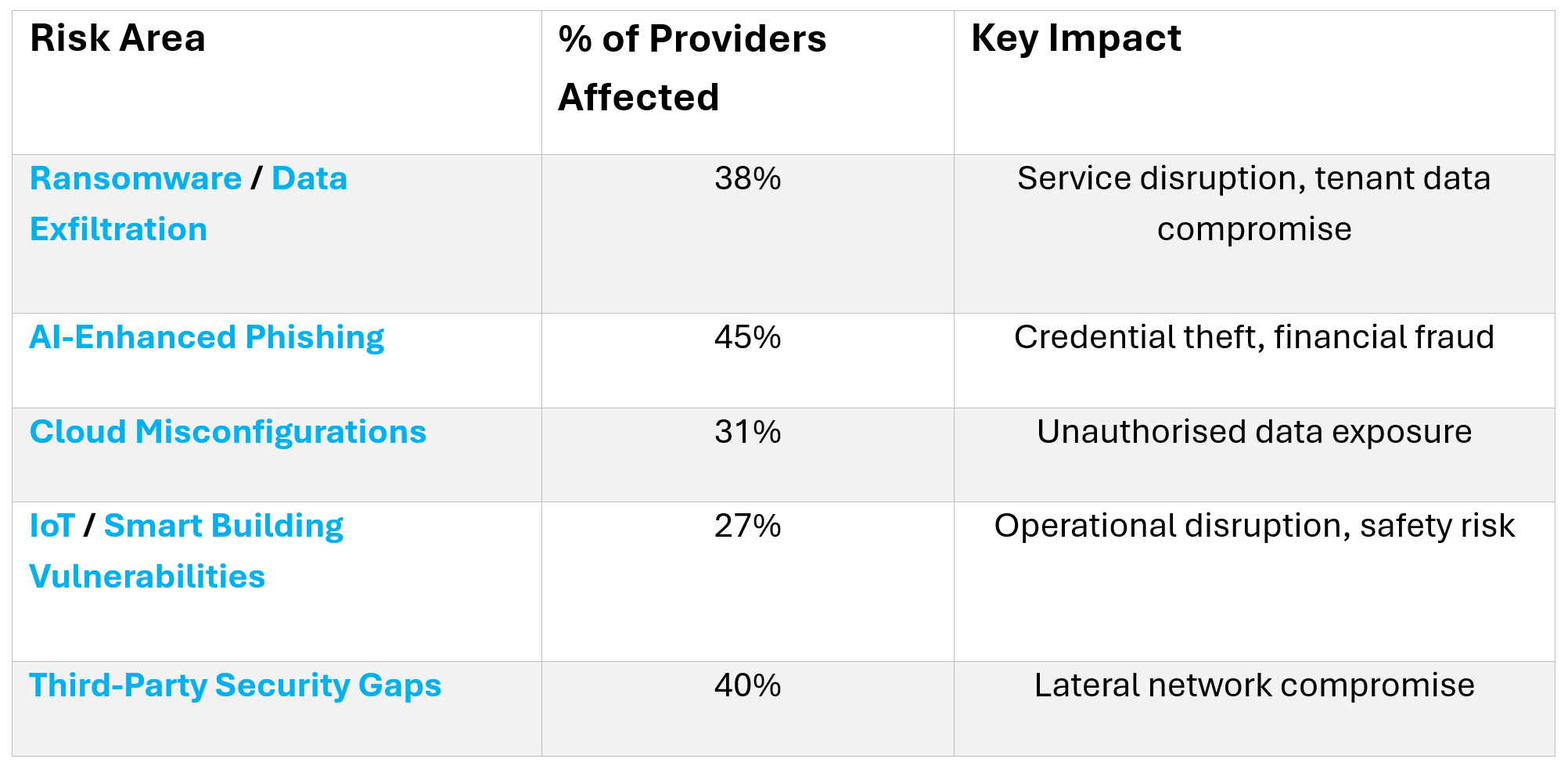
Ransomware & Data Exfiltration:
One of the most significant threats is ransomware combined with data exfiltration. Attackers now spend weeks inside networks, mapping systems and extracting data before deploying encryption. In the housing sector, this can include tenancy records, arrears data, identification documents, repairs histories, safeguarding notes, and even behavioural insights from digital interactions. A single breach can therefore create both operational paralysis and a profound breach of tenant trust.
Phishing & Social Engineering:
Another escalating issue is AI-powered phishing and impersonation attacks. Threat actors are using machine learning to mimic writing styles, generate highly convincing emails, and even create deepfake audio to impersonate senior leaders. Housing organisations often operate high-volume inbound communication channels, making it easier for malicious emails to be lost in the noise. These attacks frequently target:
finance teams handling procurement
repairs coordinators engaging with contractors
IT and digital transformation teams
executives with privileged access
Data Governance & Compliance Pressures:
Many housing providers store large volumes of legacy data across multiple systems - on-premises servers, cloud platforms, shared drives, mobile devices, contractor portals, and historic CRM databases. Without a unified governance structure, this creates blind spots that attackers can exploit.
Third-Party & Supply-Chain Vulnerabilities:
These risks are compounded by third-party and supply-chain vulnerabilities - with housing providers relying on a diverse ecosystem of external contractors for maintenance, care services, IT, payment platforms, and customer management systems.
Any one of these partners may have weak security controls, shared access credentials, or outdated software, turning suppliers into the easiest route into the organisation.
IoT & Smart Building Security:
The adoption of IoT and smart building technology introduces new operational threats. Devices such as door-entry systems, CCTV, smart thermostats, energy-management sensors, and lift monitoring systems are often installed by external suppliers and connected to internal networks. When poorly segmented, a compromise of a single IoT device can open pathways into mission-critical systems.
Sector Data Snapshot (2025):
Addressing Cyber Risk: Strategic Approaches

Mitigating these threats requires a blend of technical, operational, and organisational strategies:
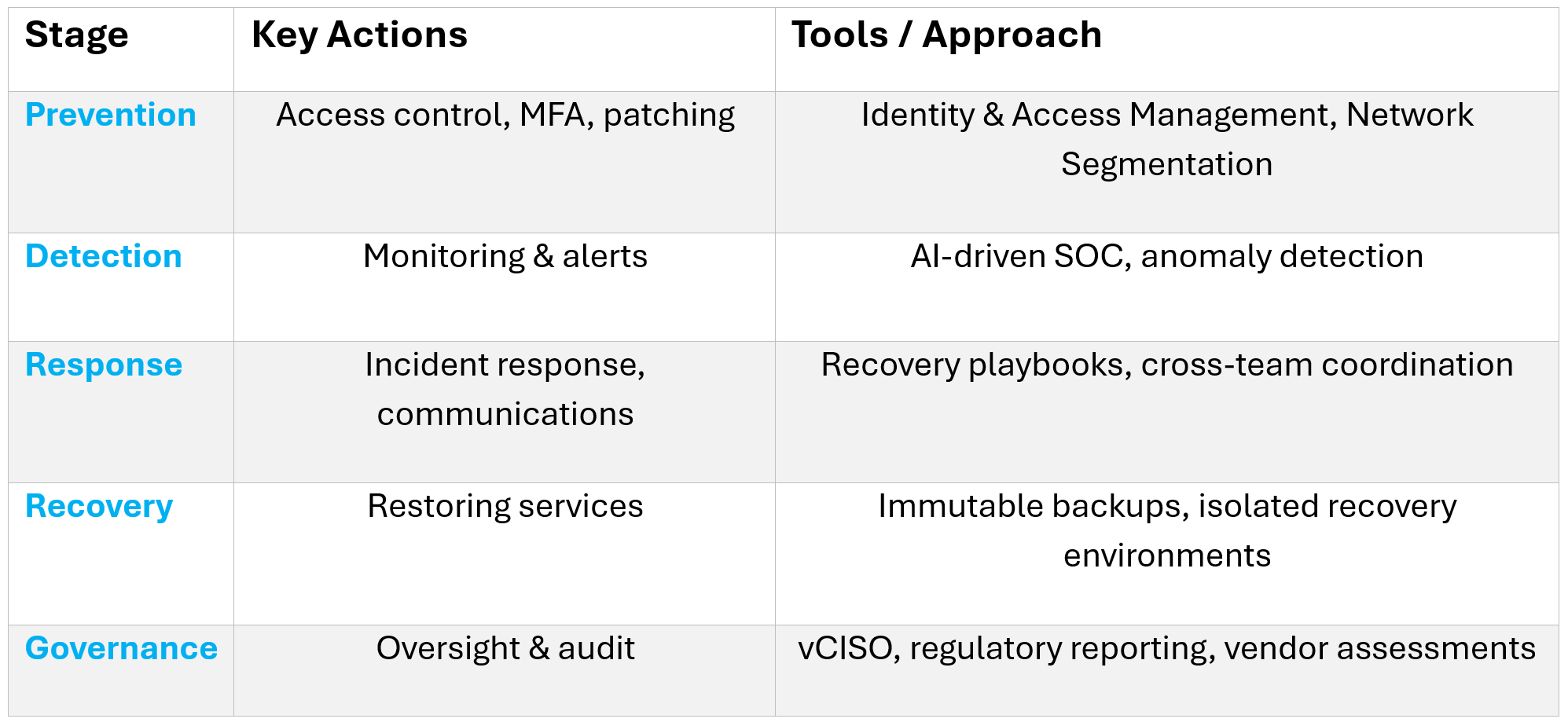
Identity & Access Management
Adaptive, context-aware authentication (including biometrics or passwordless solutions) reduces the risk of credential compromise. Continuous monitoring and AI-driven anomaly detection further strengthens identity protection.
Operational Resilience & Recovery
Housing providers should maintain immutable backups and isolated recovery environments. Disaster recovery exercises should include cloud, IoT, and legacy systems to ensure rapid service restoration.
Data Governance & Compliance
Centralising, classifying, and automating the lifecycle of tenant data reduces exposure and ensures compliance with regulatory frameworks. Predictive threat modelling allows organisations to prioritise protective measures for the most sensitive data.
Third-Party & Vendor Oversight
Continuous monitoring of vendor activity, coupled with scenario-based simulations and contractually mandated security obligations, helps manage supply-chain risk.
Human-Centric Resilience
Scenario-driven, continuous staff training and cross-team exercises build adaptive organisational awareness. Clear resident communication protocols maintain trust during incidents.
Case Example: Third-Party Risk in a Housing Provider Environment
Scenario: A maintenance contractor inadvertently exposes cloud credentials.
A regional housing association relied on a maintenance contractor to manage property repairs and updates. To streamline fieldwork, the contractor supervisor stored shared cloud login credentials in a personal, unsecured storage account. Those credentials were subsequently compromised via a phishing attack, giving the attacker access to the contractor portal.
Although access was initially limited, the attacker could explore system architecture, identify potential escalation paths, and attempt lateral movement toward core operational systems.
Impact:
The exposure created multiple risks for the housing provider. Operationally, there was the potential for disruption to repair scheduling, maintenance reporting, and property management workflows. From a data perspective, tenant information linked to maintenance records was at risk, which could have triggered regulatory reporting requirements and eroded resident trust. The incident also highlighted broader governance weaknesses: without monitoring and segmentation, such low-level breaches could evolve into significant system-wide compromises, demonstrating that third-party access remains one of the sector’s highest-risk vectors.
Solution:
The housing provider successfully contained the incident through a combination of layered controls and proactive governance measures. Continuous monitoring flagged the unusual login activity within minutes, while strict network segmentation prevented the attacker from accessing internal IT systems or sensitive tenant data. Conditional access rules blocked suspicious device and location attempts, and pre-established response protocols ensured the internal team disabled the compromised account immediately. Additionally, prior breach simulations and tabletop exercises meant staff were prepared to act quickly and decisively.
The incident concluded without operational downtime or tenant impact, reinforcing the importance of combining technical controls, governance, and staff readiness to manage third-party risk effectively.
Operational & Strategic Benefits
Adopting a proactive approach to cyber risk offers measurable benefits:
Operational Continuity: Services such as rent collection, repairs, and emergency housing remain uninterrupted.
Tenant Trust & Reputation: Demonstrates responsible data handling and strengthens stakeholder confidence.
Regulatory Compliance: Supports GDPR, ESG reporting, and cyber insurance mandates.
Strategic Differentiation: Cyber maturity enhances credibility with funders, partners, and local authorities.
Visualising the Cyber Resilience Lifecycle:
How PureCyber Supports Housing Providers

PureCyber’s managed services help organisations translate risk into actionable resilience:
Managed Threat Monitoring: Our Managed Threat Monitoring (24/7 SOC) combines human analysis with AI-driven detection, monitoring everything from cloud platforms and Microsoft 365 environments to IoT devices and legacy infrastructure. This ensures threats are identified early, before they escalate into full-scale incidents.
Governance & Compliance Leadership: PureCyber’s vCISO and governance services offer leadership-level oversight, guiding providers through regulatory expectations, data governance improvement programmes, risk frameworks, board reporting, and incident readiness planning. This is especially valuable for organisations without internal cyber leadership capability.
Vendor & Supply-Chain Assurance: PureCyber also delivers specialist supply-chain security assurance, including vendor monitoring, due-diligence assessments, and simulated exploit testing to uncover vulnerabilities introduced by third parties. This helps housing organisations manage one of their most significant sources of risk.
Human & Organisational Readiness: Adaptive staff training, cross-team simulations, and board-level readiness reviews build organisational resilience.
Penetration Testing & Red-Teaming: Finally, PureCyber’s penetration testing, red-teaming, and cloud/IoT security assessments provide organisations with clear visibility into vulnerabilities across their environments, prioritising fixes based on real-world attack pathways.
The UK housing sector faces a complex navigation of cyber threats, shaped by digital transformation, sophisticated attackers, and evolving regulatory pressures. By embracing predictive, adaptive, and integrated resilience strategies - spanning technology, human factors, and governance, housing providers can transform cyber risk from a liability into a strategic advantage.
With PureCyber’s end-to-end managed services, organisations can protect tenant data, ensure continuity of critical services, and build long-term operational resilience, safeguarding both reputation and critical operational outcomes.
How PureCyber Can Help
The PureCyber team are here to take over the burden of your cyber security and ensure your organisation’s data remains secure and well managed, with proactive monitoring and real-time threat intelligence - providing you with a comprehensive and reliable cyber department to support you in all aspects of your security efforts, including: 24/7 Security Operations Centre (SOC) services, MXDR (Managed Extended Detection & Response),Threat Exposure Management (TEM) & Brand Protection Services & Penetration Testing.
PureCyber is recognised as an Assured Service Provider by the NCSC to offer governance and compliance consultancy services/audits. Contact our team of compliance experts to enquire about our full range of Governance Support - including Cyber Essentials, ISO 27001, FISMA, SOC1 and SOC2 standards.
Get in touch or book a demo for more information on our services and how we can safeguard your organisation with our expert cyber security solutions.
Email: info@purecyber.com Call: 0800 368 9397